
The largest state in the United States, Alaska is one of North America’s last great wildernesses. Spanning the Arctic Circle, the so-called ‘last frontier’ is a destination ideal for anyone with a taste for the great outdoors, and a love for the world’s wild places.
Not only does Alaska boast an incredible 6,600 miles of stunning coastline, but its 665,000 mile area encompasses many of Earth’s greatest sights: lofty mountains, sparkling glaciers, crystal clear salmon rivers, unique wildlife, and the mysterious Northern Lights. Here’s our guide to the top 10 reasons to visit Alaska.
Table of Contents
- 1. Incredible Wildlife Sightings
- 2. Spotting the Northern Lights
- 3. Enjoy Magnificent Landscapes
- 4. Spectacular Whale Watching
- 5. A Gateway to Summer and Winter Sports
- 6. America’s Highest Peak
- 7. Historic Wonders
- 8. Get Up Close With Glaciers
- 9. Learn About Alaska’s Human Culture
- 10. The World’s Best Salmon Fishing
1. Incredible Wildlife Sightings
There’s no doubting that Alaska’s impressive diversity of wildlife is a major attraction for many. Alaska’s habitats are able to count a vast array of imposing species among their number, including 70% of North America’s brown bears and an astonishing 98% of the region’s Kodiak bear population, which has now hit 100,000 individual animals.
The winter months see polar bears arrive on the shores of the uninhabited St Matthew Island and St Lawrence Island, while herds of the largest subspecies of moose in existence can be found at Kincaid Park throughout the year.
Similar in stature, caribou roam the tundra grasslands of Alaska’s mountain regions, displaying their magnificent year-round antlers. With prey species in abundance, wolves are another possible sighting for wildlife lovers, with packs also known to take on Alaska’s 900 or so surviving bison.
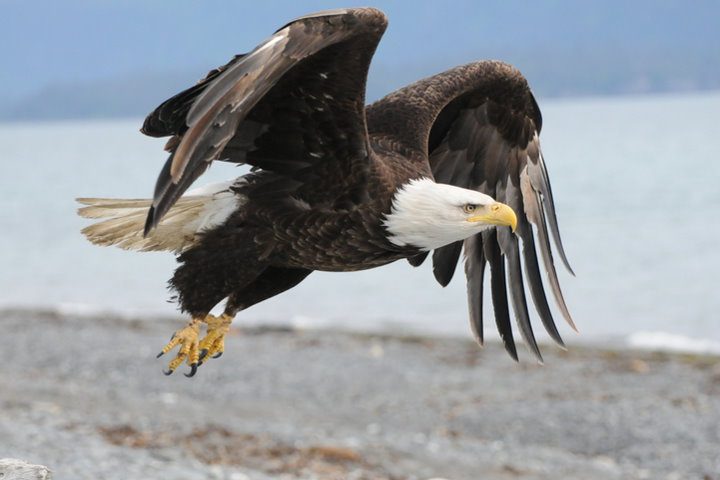
Head towards the state’s expansive coastline, equivalent to eight Californias in length, and Alaska’s mammals diversify to walrus and even sea otters, while the crisp clear skies are the habitat of bald eagles, great grey owls, and horned puffins among other photo-worthy species. Each spring, the Stikine River receives the largest gathering of American bald eagles known anywhere.
2. Spotting the Northern Lights
Caused by particles emitted by the sun striking the Earth’s atmosphere, the Northern Lights are one of nature’s finest displays. Limited to the world’s northernmost climes, Alaska is one of just a few places globally – and the only location in the US – where there’s a chance to experience the silent curtains and ribbons of green, blue, and red which literally hail from another world.
Known scientifically as the Aurora borealis, the Northern Lights can be witnessed from late August right through until late April, with the depths of winter being the best time to visit for encounters. Elusive as the Northern Lights are, there are ways to improve the chance of seeing this spectacle, including heading to Fairbanks.
Although there are more northerly locations in Alaska, Fairbanks is known as one of the top destinations internationally for Northern Lights viewing as a result of its central inland location, unspoiled dark skies, and uninterrupted views of the northern horizon. Plan to spend several nights in and around the town to improve your chances further.
3. Enjoy Magnificent Landscapes
Larger than the next three biggest US states combined, Alaska certainly has the size needed to wow. With untouched vistas that seem to roll on forever, it’s hard to successfully describe just how big Alaska is. In short, its magnificent landscapes have to be seen and experienced to be believed.
The northernmost, westernmost, and easternmost state (Alaska’s Aleutian Islands extend into the eastern hemisphere), its landscapes consist of everything from nearly half a million natural lakes and active volcanoes, to wetlands and mountains only the world’s best climbers have ever conquered.
Some of Alaska’s finest landscapes are to be found inland, with Fairbanks making the perfect base as the only city in a region otherwise known for its extensive wilderness. It’s also here that you’ll find Denali National Park and Preserve, which we detail further in the following sections.
However, Alaskan landscapes of astonishing wonder can also be found in and around Kodiak Island, which is home to the Yukon-Kuskokwim Delta, one of the largest river deltas worldwide.
4. Spectacular Whale Watching
Centered around the southern half of the state on the Gulf of Alaska, an area dotted with national parks and reserves, Alaskan whale watching is a well-run operation ensuring the best treatment for marine life as well as its paying passengers.
Several departure points also make it incredibly easy to add a whale watching tour to an itinerary if you’re not already on an Alaskan cruise. They are Anchorage, Seward, Homer, Kodiak, Juneau, Valdez, and Whittier.
Furthest east, on the Alaskan panhandle, departures from the state capital Juneau stick to the area’s fjord-like waterways known as the Inside Passage, where both humpback whales and orcas (killer whales) are known to congregate.
Two of the most common species in Alaskan waters, humpback whales and orcas can be seen on boat tours of Prince William Sound from Whittier and Valdez, while they can be spotted from Kodiak Island and Homer too.
Tours from Seward take in Kenai Fjords National Park and Resurrection Bay, which receives regular visits by grey and fin whales, as do the waters of Kodiak Island. For a rare opportunity to spot beluga (white) whales in the wild, head to Anchorage instead.
5. A Gateway to Summer and Winter Sports
For those for whom settling back on a whale watching tour isn’t enough of an adrenaline rush, Alaska has a long list of possible sports to participate in, whether summer or winter. The state’s eight national parks can be explored in a multitude of different ways.
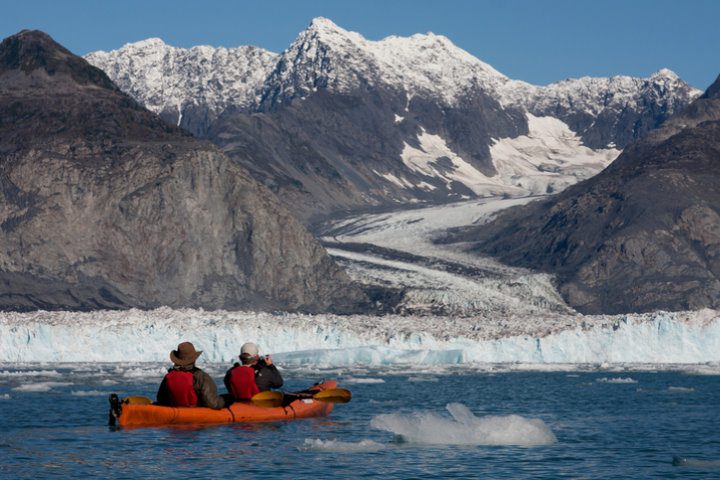
For example, Wrangell-St Elias National Park (which happens to be the largest of any in the United States) has plenty of hiking trails and boating experiences on offer. Rafting is added to hiking the Tanalian Trails of fly-in-fly-out Lake Clark National Park and Preserve, while kayaking is a great way of getting up close to the scenery of Glacier Bay National Park and Preserve.
Nor do you even have to leave Alaska’s cities! Anchorage features over 100 miles of cross-country skiing trails, with some kissing the downtown area. Elsewhere, snowmobiling is a popular outdoor activity over the winter months, alongside dog sledding.
Although you probably won’t be looking to participate yourself, the long-distance annual Iditarod dog race stretches from Anchorage to Nome every March, bringing a huge amount of attention to this traditional means of transport. The course record sits at almost eight days to cover the 938 mile course.
6. America’s Highest Peak
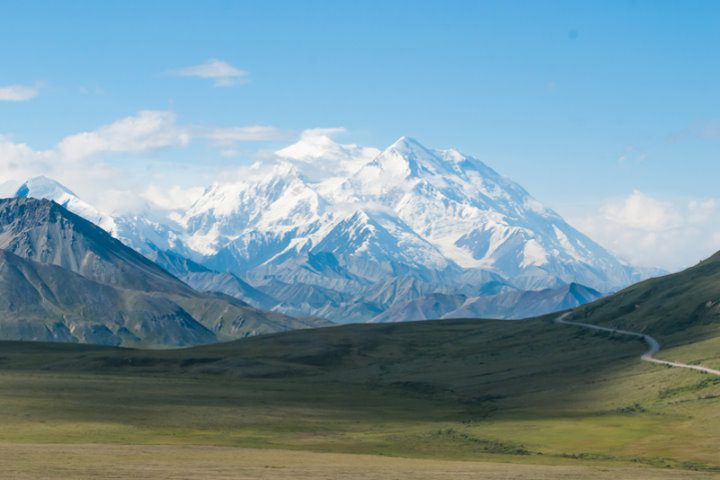
Situated in Alaska’s inland region, Denali (also known as Mount McKinley) is the highest mountain in the US. Rising to a height of 20,310 feet, the peak is also the tallest mountain in the world when measured from base to summit.
Protected by Denali National Park and Preserve, the summit is an unequivocal attraction, sitting amid glorious mountains, flowing rivers, coniferous forest, and tundra. Whether driving along Denali Park Road, joining an organized bus tour, or taking to the multitude of biking and hiking trails the national park encompasses, there are no shortage of ways to admire this majestic peak without having to go through years of training as a high-altitude mountaineer. Bikes can be rented for the day, while the park shuttle can drop you off at trail heads if you’ve got your walking boots on.
Additional attractions within the park, which lies just five miles from Anchorage by road, is its wildlife, which covers the whole Alaska ecosystem, from Dall sheep to grizzly bears. For an alternative view, join the increasing number of visitors going ‘flightseeing,’ by taking a helicopter tour or light aircraft flight to take in a much wider area than is possible on the ground however you are travelling.
7. Historic Wonders
Inhabited by indigenous people, including the Tlingit and Haida, for thousands of years, Alaska only came under the jurisdiction of the US in 1867 when it was purchased for the sum of $7.2 million. It was known as Seward’s Folly after the Secretary of State who negotiated the buy up on behalf of President Andrew Johnson. It wouldn’t become the 49th state for another 92 years.
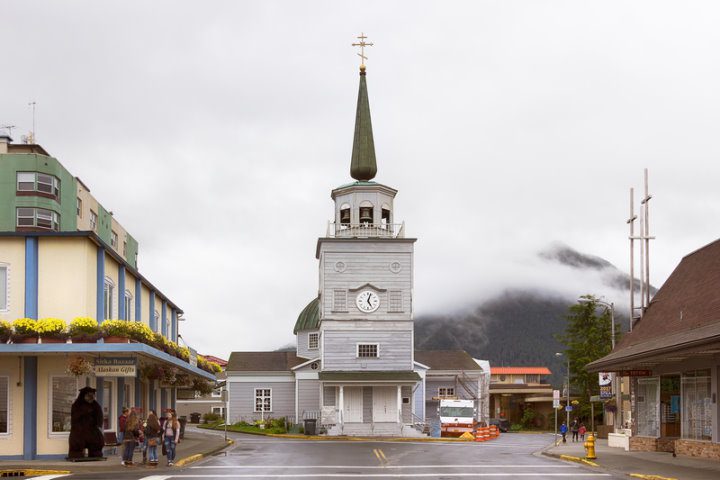
Before 1867, Alaska had been Russian territory predominantly of interest to those in the seal fur trade. This explains why Alaska is home to several Russian Orthodox churches, of which two in Kenai’s historic district are some of the easiest for tourists to view.
The city of Sitka has two less-obvious structures from Alaska’s previous owners, the wood-slated Tilson Building on Lincoln Street, and the similar looking Russian Bishop’s House. The same city is also the location of St Michael Cathedral National Historic Landmark, constructed in just four years between 1844 and 1848. One of the most important Russian-era structures in Alaska, the current cathedral is a reconstruction of the original, following a devastating fire in 1966.
8. Get Up Close With Glaciers
Seeing – and stepping onto – the blue ice of a glacier is another unmissable reason to visit Alaska. Glacier Bay National Park and Preserve is perhaps the obvious place to consider heading to first, with over 1000 glaciers now recognized as part of a binational UNESCO World Heritage Site.
Reached by air or sea since there are no roads connecting to the park, Glacier Bay’s primary attraction is its seven tidewater glaciers, of which four regularly calve, a process which sees large chunks of ice break off of the glacier. Best seen from the water, most travelers join a cruise to the national park, with rangers then joining passengers to provide a greater understanding of its nature.
But Glacier Bay is far from the only place to admire these beautiful, if chilly, forms in Alaska. Situated off the Glenn Highway about 2.5 hours from Anchorage is Matanuska Glacier. Stretching for a width of four miles at its terminus, enough water pours from it to create the Matanuska River. Even so, the glacier remains stable enough to welcome those keen to explore it on foot, albeit on an organized tour.
Anyone sailing along Prince William Sound can take in its glaciers, since there are more tidewater glaciers here than anywhere else in the world. Surprise Glacier in Harriman Fjord often thought to be one of the best for those keen to witness iceberg’s calving from a glacier’s flanks. Further glacier experiences can be had at Lake George, Exit Glacier close to Seward, and Spencer Glacier, helpfully located between Anchorage and Denali National Park.
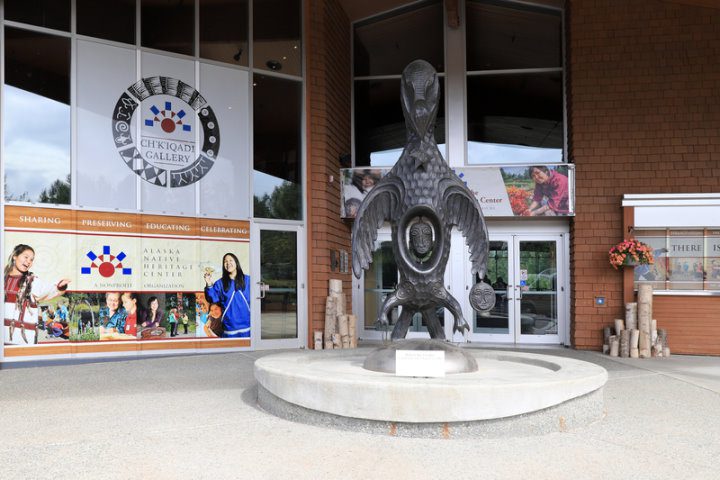
9. Learn About Alaska’s Human Culture
Alaska’s indigenous people are usually divided into 11 cultural groups, each of which have a rich tapestry of traditions. In recent years, there has been a concerted effort to record and celebrate these traditions more widely, with the Alaska Native Heritage Center a one stop shop for discovering more.
Situated in woodland around ten miles from downtown Anchorage, the center gives visitors the chance to see authentic indigenous games, storytelling, and dancing in the flesh, while the exhibition halls feature displays of traditional cultural items which are regularly rotated to ensure as much of the center’s collection is displayed as possible. Outside, six life-sized indigenous homes stand on the shores of Lake Tiulana.
Found in ‘the rooftop of the world,’ the Iñupiat Heritage Center in Utqiagvik (formerly Barrow) belies its building’s functionary exterior to detail the culture of the Iñupiat with color. Its collection of artifacts largely focuses on the peoples’ historic reliance on bowhead whales, and contains a library, traditional room for demonstrating the region’s crafts, and a gift shop too.
10. The World’s Best Salmon Fishing
The glacier waters running to Alaska’s 3000 rivers and tens of thousands of streams are home to all five salmon species found in North America’s Pacific region: king (chinook), red (sockeye), coho, pink, and chum.
What’s more, all five can be fished for at the same time during Alaska’s peak season, which lasts from May to September each year, leading to millions of fish thrashing through the waters in their desire to spawn.
The Kenai River is renowned internationally for its king salmon, the largest of all Pacific species since they grow to a length of almost five feet. Bristol Bay is known for its sockeye salmon, whose season peaks between mid-June and mid-July. If sea fishing is more your thing, salmon can be caught year-round around Homer, with fishing spots including Kachemak Bay (accessed via boat) or the town’s Spit.
Don’t Forget to Share This Post!

Ian Packham is an award-winning freelance travel writer, adventurer, and after-dinner speaker with bylines in a range of magazines and newspapers. Based in the UK, his explorations by public transportation have seen him travel everywhere from Norway and Gabon to Bangladesh and Lesotho.
Hand-Picked Related Posts
Arctic Cruise Versus Antarctic Cruise: What’s The Difference?


